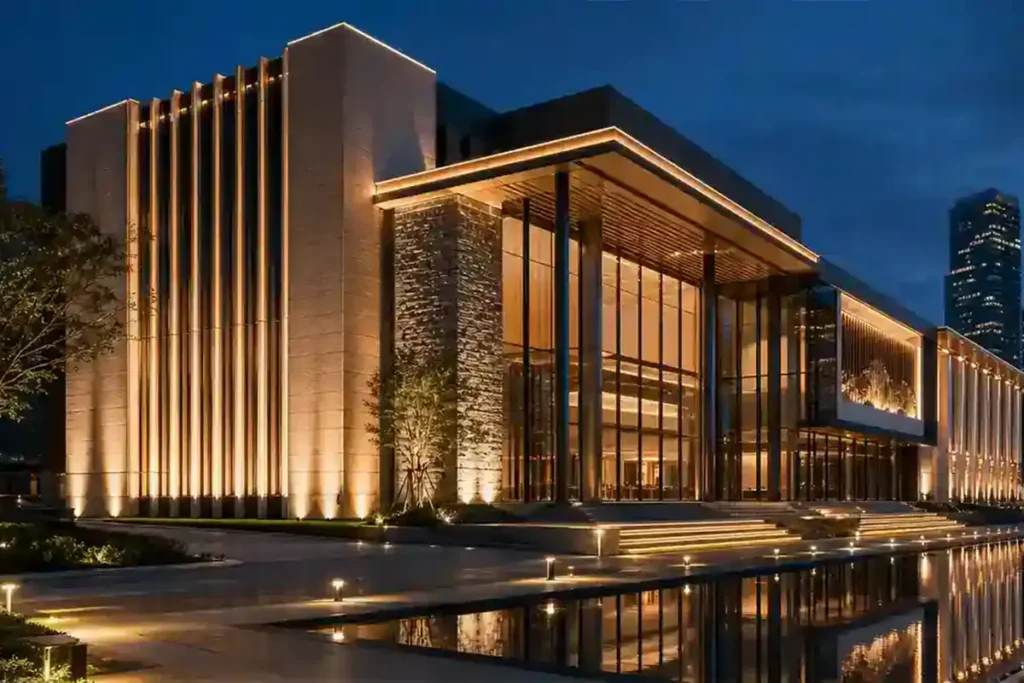
Great architecture should remain impressive after sunset. However, poor lighting design can reduce visual impact, create glare, and increase energy costs. A well-planned architectural lighting design enhances building features, improves nighttime aesthetics, and creates impressive building facade lighting effects.This guide shares 10 key principles for creating effective lighting solutions for modern buildings.
Table of Contents
1. Understand the Architectural Structure Before Lighting Design
The first principle of successful architectural lighting design is understanding the building itself before The first principle of successful architectural lighting design is understanding the building itself before selecting any lighting fixtures.
Before selecting lighting fixtures, you should carefully evaluate several architectural elements, including the building form, structural lines, surface materials, colors, and functional purpose. These factors directly influence how light interacts with the architecture and determine whether the final lighting effect feels balanced and natural.
Lighting should work together with architecture rather than compete with it.
For example:
- Stone buildings often benefit from grazing lighting, which emphasizes surface textures and creates depth.
- Glass buildings require careful lighting control to reduce unwanted reflections and glare.
- Modern buildings with clean geometric structures can use linear lighting to enhance architectural outlines and create a contemporary appearance.
By analyzing the building design first, you can select the right lighting approach to achieve the intended visual effect.
2. Use Lighting to Highlight Architectural Features
The purpose of architectural lighting is not simply to make a building brighter. The real goal is to reveal the unique characteristics that define the architecture.
A successful lighting design should focus on three key elements:
Building Silhouette
The outline of a building is one of the most recognizable features, especially at night.
Properly positioned lighting can emphasize:
- Building edges
- Rooflines
- Unique structures
- Architectural shapes
This helps create a strong visual identity and improves recognition from a distance.
Texture and Materials
Different building materials respond differently to light, and understanding this interaction is essential for effective architectural lighting design. When you plan lighting for a building, you should consider how the surface texture, color, and material characteristics will influence the final visual effect.
For example, stone surfaces often benefit from grazing lighting, which creates shadows and depth to highlight natural textures. Concrete surfaces may require careful control of light direction to avoid making the facade appear flat or uneven. Metal and glass materials need special attention because excessive brightness or incorrect angles can create unwanted reflections and glare.
By selecting the right lighting technique for each material, you can enhance architectural details, strengthen the building’s visual identity, and create a more refined nighttime appearance. However, the goal is not simply to make materials brighter — it is to reveal their unique characteristics while maintaining visual comfort and energy efficiency.
Architectural Details
Small details often define the character of a building.
When you highlight architectural details, you should avoid treating every element equally. Instead, focus on the features that contribute most to the building’s character, such as entrances, columns, decorative structures, and landscape elements. A balanced lighting approach helps create visual hierarchy without making the overall design feel excessive.
A balanced approach ensures that important details become visual focal points without overwhelming the overall design.ach ensures that important details become visual focal points without overwhelming the overall design.

3. Create a Balanced Layered Lighting Design
A professional architectural lighting design usually combines multiple lighting layers instead of relying on a single light source.
A layered approach creates depth, balance, and a more comfortable visual experience.
3.1 Ambient Lighting
When you plan architectural lighting, ambient lighting provides the foundation of the entire visual experience. You should use it to establish comfortable brightness levels and ensure basic visibility without reducing the impact of accent or decorative lighting.
3.2 Accent Lighting
You can use accent lighting to draw attention to important architectural features, such as entrances, sculptures, facade details, or landscape elements. However, you should carefully control the brightness and direction to ensure these highlights support the overall design rather than overpowering the building.
3.3 Decorative Lighting
Decorative lighting focuses more on creating atmosphere and emotional connection. For hotels, resorts, commercial buildings, and entertainment spaces, you can use decorative lighting to strengthen the identity of the space and create memorable visual experiences.
4. Choose the Right Lighting Technique for Different Architectural Elements
4.1 Create Effective Facade Lighting Design Through Proper Lighting Techniques
Facade lighting design is one of the most important parts of architectural lighting. The right lighting technique can enhance a building’s structure, highlight unique architectural features, and create a strong visual identity at night.
Different architectural elements require different lighting approaches. Choosing the appropriate method helps achieve better visual effects while avoiding excessive brightness, glare, and unnecessary energy consumption.
4.2 Facade Surfaces → Wall Washing Lighting
For large and smooth facade surfaces, wall washing lighting is an effective technique to create a clean and uniform appearance. By distributing light evenly across the surface, it helps highlight the overall building structure while maintaining a comfortable nighttime visual effect.
It creates:
- Uniform illumination
- A clean and elegant facade appearance
- Enhanced building presence
LED wall washers for facade lighting are commonly used for:
- Hotels
- Commercial buildings
- Office facades
- Public architecture
4.3 Columns and Textured Surfaces → Grazing Lighting
For surfaces with textures, such as stone walls or decorative structures, grazing lighting works well.
By placing the light closer to the surface, it creates:
- Shadows
- Depth
- Three-dimensional effects
This technique is especially suitable for historical buildings and architectural structures with rich textures.
4.4 Building Edges → Linear Lighting
Modern architecture often features strong geometric lines.
Linear lighting helps emphasize:
- Building contours
- Structural lines
- Modern design elements
It is widely used in contemporary commercial buildings and facade projects.
Landscape Areas → Inground Lighting
For outdoor spaces, landscape elements can be enhanced with inground lighting.
Applications include:
- Pathways
- Gardens
- Public landscapes
- Resort environments
Choosing the correct lighting technique according to architectural elements ensures both visual quality and functional performance.

5. Select the Appropriate Color Temperature
5.1 Create the Right Atmosphere with the Correct Color Choice
Color temperature has a significant impact on how people perceive a building at night.
The right choice can influence:
- Architectural style
- Emotional atmosphere
- Visual comfort
- Brand image
5.2 Warm White (2700K-3000K)
When you choose color temperature for an architectural project, you should consider the building style, surrounding environment, and desired atmosphere. Warm white lighting (2700K–3000K) is often suitable for hotels, resorts, historic buildings, and luxury residential projects because it creates a comfortable and elegant feeling.
5.3 Neutral White (4000K)
For modern commercial buildings and office spaces, neutral white (around 4000K) can create a cleaner and more professional appearance while maintaining visual clarity.
5.4 RGB/RGBW Lighting
RGB and RGBW lighting solutions are ideal for projects requiring dynamic lighting effects.
If your project requires dynamic visual effects, RGB/RGBW lighting can provide greater flexibility. You can create different lighting scenes for landmark buildings, entertainment venues, special events, or creative facade lighting applications.
6. Control Light Distribution and Reduce Glare
6.1 Achieve Precise Lighting Instead of Simply Increasing Brightness
A successful architectural lighting design is not about making a building brighter. It is about delivering the right amount of light to the right place.
Poor light distribution can lead to:
- Excessive brightness
- Uncomfortable glare
- Uneven illumination
- Light pollution
Therefore, designers need to carefully consider light direction, beam angle, and installation position.
6.2 Choose the Right Beam Angle
Beam angle directly affects how light covers a surface.
When selecting beam angles, you should consider the distance between the fixture and the target surface, the size of the illuminated area, and the desired visual effect. Narrow beam angles are suitable for highlighting specific architectural details or long-distance applications, while wider beam angles are better for achieving uniform illumination on large facade surfaces.
6.3 Control Light Direction
The installation position and lighting direction play an important role in the final result.
Proper lighting placement can:
- Enhance architectural depth
- Reduce unwanted shadows
- Improve visual comfort
- Prevent light from affecting surrounding areas
For outdoor projects, especially facade lighting, controlling light direction is essential to avoid disturbing nearby buildings or public spaces.
6.4 Reduce Light Pollution
Modern architectural projects increasingly focus on responsible lighting design.
Effective solutions include:
- Using suitable light distribution
- Avoiding excessive brightness
- Applying intelligent control systems
- Selecting fixtures with appropriate optical designs
A professional lighting solution should enhance the building while respecting the surrounding environment.
7. Integrate Smart Lighting Control Systems
7.1 Improve Flexibility and Efficiency Through Intelligent Control
Modern buildings increasingly require an architectural lighting control system that provides flexible, efficient, and intelligent lighting management. By combining advanced control technologies with architectural lighting solutions, project teams can create dynamic lighting scenes, improve energy efficiency, and simplify long-term operation.
By integrating smart lighting control, you can adjust lighting performance according to different scenarios, schedules, or events. This not only improves visual flexibility but also helps reduce unnecessary energy consumption and simplify long-term management.
Common functions include:
- Dynamic lighting scenes
- Remote control
- Scheduled operation
- Brightness adjustment
- Energy management
7.2 DMX512 Control for Dynamic Architectural Lighting
DMX512 is one of the most widely used control protocols in architectural lighting control systems, especially for projects that require dynamic lighting effects and color-changing applications.
You can apply DMX512 control in:
- RGB/RGBW facade lighting
- Landmark buildings
- Entertainment venues
- Architectural lighting displays
With DMX control, you can create:
- Color-changing effects
- Customized lighting scenes
- Dynamic visual experiences
By integrating DMX512 into your architectural lighting design, you can achieve greater flexibility and create lighting effects that adapt to different events, environments, or brand requirements.
7.3 DALI Control for Commercial Lighting Management
DALI (Digital Addressable Lighting Interface) is commonly used in architectural lighting control systems for commercial buildings and projects that require precise fixture management and energy optimization.
It provides:
- Individual fixture control
- Lighting adjustment
- Energy management
- System integration
For projects requiring both decorative effects and functional lighting management, choosing the right control system is essential.

8. Consider Energy Efficiency and Sustainability
8.1 Design Lighting Solutions with Long-Term Performance in Mind
Energy efficiency has become an important consideration in modern architectural projects.
A good lighting design should not only create impressive visual effects but also reduce long-term operating costs.
8.2 Use High-Efficiency LED Technology
When you select LED fixtures for architectural projects, you should consider not only initial lighting performance but also long-term operating costs. High-efficiency LED technology can help you reduce energy consumption, extend maintenance cycles, and achieve more sustainable lighting performance throughout the project lifecycle.
8.3 Combine Lighting Design with Smart Control
Smart control systems can further improve energy efficiency by:
- Adjusting brightness according to requirements
- Reducing unnecessary lighting operation
- Creating scheduled lighting programs
This is especially valuable for:
- Government projects
- Commercial buildings
- Green building developments
A sustainable architectural lighting solution helps create efficient architectural lighting solutions that balance visual impact with responsible energy use.
9. Choose Reliable and Weather-Resistant Architectural Lighting Fixtures
9.1 Ensure Long-Term Performance in Different Environments
For outdoor architectural lighting projects, you should consider environmental conditions such as rain, humidity, temperature changes, dust, and UV exposure. Choosing fixtures without sufficient protection can lead to water damage, reduced lifespan, higher maintenance costs, and unexpected project risks.
9.2 Key Factors to Consider When Choosing Fixtures
9.2.1 IP Rating
For outdoor applications, appropriate protection levels are essential.
Depending on the environment, projects may require:
- IP65 protection for general outdoor applications
- IP66 protection for harsher conditions
- IP67 protection for areas exposed to water or demanding environments
9.2.2 Material Quality
Material quality directly affects the durability and appearance of outdoor lighting fixtures. You should consider corrosion resistance, structural strength, and surface treatment, especially for projects located in coastal or harsh environments.
9.2.3 Heat Dissipation
Effective heat dissipation is essential for maintaining LED performance. When selecting fixtures, you should pay attention to housing design and thermal management because poor heat control can reduce lifespan and affect long-term reliability.
9.2.4 Maintenance Requirements
Professional projects should consider not only initial costs but also long-term maintenance.
Reliable fixtures reduce:
- Replacement frequency
- Labor costs
- Operational risks
10. Consider Long-Term Project Requirements and Maintenance
10.1 Choose a Partner Who Understands Your Project Goals
Successful architectural lighting projects require more than high-quality fixtures. A professional lighting supplier should provide complete support from design concept to project implementation.
10.2 Technical Support
When you work with an architectural lighting supplier, you should expect more than product delivery. A professional partner should help you evaluate the building structure, lighting objectives, and application environment to recommend suitable solutions.
Product Selection
You should also consider factors such as beam angle, power requirements, color temperature, and installation conditions to ensure the selected fixtures achieve the expected lighting effect.
Installation Guidance
Providing support for:
- Installation methods
- Wiring solutions
- Project requirements
10.3 Custom Lighting Solutions
Every architectural project has unique requirements.
A professional supplier should support customization, including:
- Custom length
- Beam angle adjustment
- Power configuration
- Control system compatibility
- Special installation requirements
10.4 Project Support
From initial planning to final installation, reliable suppliers should provide continuous assistance to ensure the lighting design achieves the expected result.
11. Conclusion
Modern architectural lighting design requires a balance between architectural aesthetics, lighting performance, energy efficiency, smart control, and product reliability.
The right lighting strategy can transform buildings after sunset, highlight architectural features, and create memorable visual experiences.
By working with an experienced architectural lighting solution provider, architects, designers, and project teams can achieve more effective, sustainable, and reliable lighting results for modern buildings.
FAQ
How do you choose the right architectural lighting fixtures for a project?
Choosing the right architectural lighting fixtures depends on several factors, including the building structure, installation environment, lighting objectives, beam angle, color temperature, and required control system. A suitable fixture should not only achieve the desired visual effect but also provide reliable performance, easy maintenance, and long-term value for the project.
What information should you provide before starting an architectural lighting project?
Before starting an architectural lighting project, you should consider information such as building drawings, facade materials, installation height, viewing distance, lighting objectives, and control requirements. Providing these details helps create a more accurate lighting proposal and ensures the selected solution meets both aesthetic and technical requirements.
How can architectural lighting improve the value of a building?
Architectural lighting can enhance a building’s identity, improve nighttime visibility, and create a stronger visual impression. For commercial buildings, hotels, and landmark projects, well-designed lighting can improve user experience, support branding, and increase the overall appeal of the property.
What factors affect the cost of an architectural lighting project?
The cost of an architectural lighting project depends on factors such as fixture type, project scale, installation conditions, control requirements, customization needs, and product performance standards. A lower initial cost does not always mean better value, as reliable fixtures and efficient lighting design can reduce maintenance costs over time.
Can architectural lighting fixtures be customized for different projects?
Yes. Architectural lighting fixtures can often be customized according to project requirements, including fixture dimensions, beam angles, power options, color temperature, mounting methods, and control compatibility. Customization helps ensure the lighting solution fits the architectural design and achieves the expected visual effect.